 To readers of popular evangelical periodicals the names of Timothy Keller, John Piper, John MacArthur, Charles Mahaney and Mark Driscoll will not be new. Though ministers in a variety of different denominations, they are linked together in a movement that has been labelled “New Calvinism.”
In the June 2014 issue of the Banner of Truth Magazine, Iain H Murray comments on a recent trip he made to the USA and says with respect to this movement that “it is no more ‘new’ than the doctrine that was heard under Whitefield and Edwards in the 1740s, or later, under Spurgeon or Lloyd Jones.” He rightly identifies the worrying use of the word “new” at the start of “New Calvinism.” He dismisses the word “new” saying it too easily suggests a departure from “the Old.” Many of us have a deep respect for Iain Murray and have a real affection for both his books and his labours in reprinting and publishing with the Banner of Truth. However, we need to be concerned when we see him associating this type of movement with true Calvinism or inaccurately suggesting that it teaches the same doctrines as Whitefield and Spurgeon.
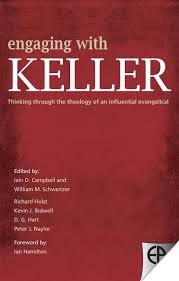
One of the more senior ministers in the Free Church of Scotland, David Robertson, has a blog on which he has recently reviewed a book that is mildly critical of Timothy Keller titled Engaging with Keller (Evangelical Press 2013). The book is edited by the Free Church minister Iain D Campbell and William M Schweitzer, the minister of the Gateshead congregation of EPCEW (the Evangelical Presbyterian Church in England and Wales). In Robertson’s review, he comments: “In St Peters we have used Tim Keller’s Bible studies a lot, in fact the Kirk Session decided this week that we would be using his Galatians for you – as the basis for all our home groups this year. Perhaps we should rethink? This book suggests that Tim Keller is suspect on such important topics as creation, the Bible, the Trinity, sin and hell. Hardly inconsequential!” Shortly afterwards, Robertson adds, “In the interests of fairness I should point out that I know Tim Keller and regard him as a friend, and that he has been very helpful to me personally. Unlike most of the writers in this book I have been able to actually engage with Keller and therefore some of this is written from that experience.”
New Calvinism is a movement whose thinking and ideas are spreading rapidly and this review comments on Engaging with Keller and contrasts its analysis of the movement with that contained in Dr E S Williams’ book, New Calvinists: Changing the Gospel (Wakeman Trust 2014).
Engaging with Keller is a compilation which interacts with different aspects of Keller’s theology written by seven contributors who, with the exception of Daryl G Hart, have either been, or are, based within the UK. In the General Introduction, the two editors make clear that as they engage with Keller they are not doing so on a personal level and state: “We have all benefited from various aspects of his teaching and particularly from his example as a church planter.” Campbell and Schweitzer add, “Nor is this book seeking to make any statement about his personal orthodoxy. We gladly acknowledge that Keller intends to teach the orthodox truth.” The same preface asks the question: “Why debate with Tim Keller?” They answer in these terms: “precisely because Tim Keller is a good man” and “Keller has consistently demonstrated his commitment to Reformed Orthodoxy in numerous ways.” They then cite his ministerial status in the Presbyterian Church in America and his serving at Westminster Theological Seminary as examples of his commitment to the Westminster Confession.
One is left at the end of the General Introduction with the feeling that Keller is a Reformed, orthodox man whose teaching just needs watching on a few points. This point alone irritates David Robertson who writes on his blog, “If Keller is guilty of misleading the church about hell, creation, the Bible, evangelism, apologetics, the social gospel, sin and the Trinity, then why bother being ‘irenic’ about it? Was Jesus irenic when he called the Pharisees ‘white washed tombs’? . . . The trouble is that the authors of this book are playing the modern Christian game – as long as you say it nicely and appear to be nice (gracious, irenic, loving) etc then you can say what you want. Personally I find this both somewhat disingenuous and pathetic. If Keller is dangerous then just say so. Don’t hide it in modern reformed christianspeak.”
It is true that Engaging with Keller does attempt to be irenic – which in this instance, is a serious fault. At the end of the book, you are left aghast at the level of fundamental doctrine that is being denied by Keller and which the authors are not always clear to denounce. The first chapter, which is written by Iain Campbell, highlights that Keller suggests that simply to define sin as a violation of God’s law is problematic in a postmodern culture and that it should be rebranded. Keller’s starting point is that everyone recognises that there is something wrong in the world and that sin is the despairing refusal to find your deepest identity in your relationship and service to God. Sin is seeking to become oneself, to get an identity, apart from Him. In downplaying the role of sin as a transgression of the law of God Keller is obscuring its true nature.
In Chapter 2, which is contributed by Schweitzer, it is pointed out that Keller sees the theology of judgment and hell as one of “Christianity’s most offensive doctrines.” Keller takes his arguments from C S Lewis and presents a hell that God does not send anyone to, where the punishment is self-inflicted and no-one asks to leave. Keller ends up with a hell that is a metaphor with symbolic fires. Keller’s presentation of hell, and even Schweitzer’s controversy with it, fails to pick up sufficiently on the importance of the doctrine. John Blanchard rightly notes in his book Whatever Happened to Hell (Evangelical Press 1993) that the theme of judgment and hell are spoken about more by the Lord Jesus than anyone else in Scripture.
Kevin Bidwell, the EPCEW minister in Sheffield, in the third chapter, picks up on some of the more significant errors that Keller holds in relation to the Trinity. Astonishingly, Keller uses the metaphor of a “divine dance” to describe the inter-Trinitarian relationships. Bidwell argues that the nub of Keller’s arguments centres on the emphasis he gives to the attribute of God’s love and the way that he ignores the other Divine attributes, such as holiness, incomprehensibility, jealousy, graciousness and mercy. The problem with Bidwell is that he is not strong enough in the way that he interacts with the unacceptable use of the idea of dancing within the Trinity. Bidwell says “How about the range of dance genres that could be invoked in the minds of readers to aid them to conceive of the ineffable essence of God? To one reader, break-dancing may be involved in their thinking, to another the tango, or the waltz, to someone else ballet, or to others disco dancing. None of these contemporary dance movements remotely convey the theological implications of outward-moving divine action.” It is to be regretted that Bidwell’s chapter did not contain a reference to Robert Dabney’s article on Dancing (Discussions: Evangelical and Theological, vol. 2, pp. 560-593, Banner of Truth 1967), where he shows the incompatibility of dancing with Christianity – never mind the inter-Trinitarian relationships – and how it is condemned by Scripture.
The remaining chapters deal with such themes as the centrality of social justice in Keller’s thought, his teaching on hermeneutics and theistic evolution. The inadequacy of his hermeneutics flows directly from his theology. Keller is a theistic evolutionist and believes that creation and evolution are not opposed, and that their supposed incompatibility has been greatly overdrawn. He argues that evolution is simply the means by which God created. Does this mean then that evolution occurred before or after Adam? Does it mean that the seven days of creation were not real days? One can posit these kinds of ideas, but they are absurd if you try to defend them while maintaining the accuracy and inerrancy of the Bible.
Engaging with Keller leaves the reader profoundly dissatisfied with Keller’s teaching, and with the conviction that the authors of the book have not been sufficiently faithful or strong in condemning his false views. In seeking to interact with one they considered a “good man”, they have left their readers with the inadequate impression of his errors.
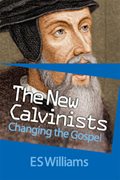
A much better and more balanced treatment of the failings of both Keller and the New Calvinist movement is found in E S Williams’ book, The New Calvinists: Changing the Gospel. He begins by giving a brief history of the movement and identifying a range of its key personalities. He helpfully points out its worldliness and its attachment to contemporary worship, including the use of “reformed rap” and “holy hip hop”. He exposes Keller’s views on a wide range of topics, including his opinions on eternal punishment. He points out that Keller argues for the possibility that people from non-Christian faiths could go to heaven. Pressed by a journalist about what happens to people of other religions, Keller responded, “People in other religions, unless they find Christ, I don’t know any other way; but I also get information on a need-to-know basis, so if there’s some trapdoor, or something like that, I haven’t been told about it.” Williams accurately condemns this, saying, “Keller’s trapdoor possibility is unbiblical and deeply heretical, for it implies, contrary to Scripture, that belief in Christ is not the only way of salvation for rational adults.” He adds, “And a final shock – Tim Keller says that he does not know what happens to unbelievers who die without Christ.” Williams also critiques Keller by detailing his affinity with Romanism and his embracing Roman Catholic writers.
Williams then deals with the views of John Piper, who served as pastor of Bethlehem Baptist Church in Minneapolis, Minnesota for thirty three years and founded Desiring God Ministries. Piper is a New Calvinist and gave a recent lecture on the topic at Westminster Seminary. Piper became famous in the evangelical world through the publication of his book Desiring God (Multnomah 1986). As Williams observes, this book presents his “Christian hedonism” philosophy of life based on the ideas of the Roman Catholic philosopher Blaise Pascal and C S Lewis. These ideas have produced in Piper’s thinking a hopelessly over-simplified view of sanctification and left him open to charismatic thinking, theatricalism and contemporary worship extremes. Williams notes that Piper wrote on his website a few years ago that “God actually spoke to me. There was no doubt that it was God.” Piper stands at the very centre of New Calvinism movement – and Iain Murray has spoken at one of his conferences.
The chapter on Mark Driscoll, senior pastor at Mars Hill Church in Seattle, is very direct. It shows his use of coarse, lewd and vulgar language. It identifies his shocking dress in the pulpit, often wearing T-shirts with blasphemous remarks on them. He picks up on Driscoll’s attachment to loud rock music, endorsement of supernatural visions and views on tattoos. Driscoll has no objection to tattoos and goes so far as to argue that “Jesus loves tattoos”. Driscoll is apparently the most downloaded pastor on the web. In a sermon he boldly asserted, “You are free in Christ to be weird . . . Let me just say our position is this – tattoos are not a sin, right. Jesus Christ is going to have a tattoo – Revelation says on His second coming. It says that down His right leg will be written King of Kings and Lord of Lords, which will be really freakish for all the fundamentalists to see – Jesus all tattooed up. I can”t wait for that day.”
In the light of such outrageous comments, it is pleasing to read Williams pointing out: “Throughout history the tattoo has carried the mark of paganism, and for generations Christians have felt the emphatic command of the Old Testament to be respected even in the present era (Leviticus 19:28).” The New Calvinism of men like Mark Driscoll contemptuously dismisses godly standards of previous generations, as they plant their culturally liberal outlook on churches where they have influence. David Robertson regards the contributors to Engaging with Keller as “not shooting our own wounded, but our winners.”
Our Free Presbyterian fathers remained separate from the flawed witness and testimony of the Free Church even when it had ministers like Kenneth Macrae and G N M Collins. The Free Church of 2014 is a very far cry from the Free Church of those men, when it has ministers like David Robertson. It comes as no surprise that he is a friend of Keller or that he uses his books in his Dundee church. Their outlooks appear to be similar. Robertson is a director and trustee of the Solas Centre in Dundee which, along with St Columba’s Free Church in Edinburgh, hosted an event called “Heaven in a Nightclub”, with performers like Ruth Naomi Floyd who was billed as one of the great gospel jazz voices. It is little less than tragic that Robertson is the minister in a church building that was once the scene of Robert Murray M’Cheyne’s ministry.
Repeatedly on his website, Robertson defends the compromises made by Tim Keller in his presentation of what he regards as the gospel. As Free Presbyterians, our testimiony is both Evangelical and Calvinist. We must hold up this New Calvinism to the scrutinising light of Scripture and examine its character and conduct. We must assess it in order to see if it possesses the marks of real Christianity, and when we see error we should not be slow to expose it. As the Apostle John pointed out, “They are of the world; therefore speak they of the world, and the world heareth them. We are of God: he that knoweth God heareth us; he that is not of God heareth not us. Hereby know we the spirit of truth, and the spirit of error” (1 John 4:5-6).
Engaging with Keller identifies some of his errors, but is inadequate in its handling of them. The New Calvinists – Changing the Gospel is a much better book, that warns readers against the errors of this movement and shows the utter folly of linking these men with the likes of Whitefield and Spurgeon. Iain Murray appears to have been taken in by them, or swayed in his view by his friendship with John Piper. We should be glad that men like Dr Williams are more discerning.
Andrew R Middleton