Free Presbyterian Church of Scotland

Reformed in Doctrine, Worship, and Practice

“Thou hast given a banner to them that fear thee, that it may be displayed because of the truth.” Psalm 60:4

  • Contact Us
  • Español
  • 中文
  • About Us
    • Who We Are
    • What We Contend For
    • What We Believe
    • How We Worship
    • How We Are Organised
    • Important Documents
    • Frequently Asked Questions
  • Resources
    • Articles
    • BKonline Course
    • Scripture and Catechism Exercises 2025-26
  • Publications
    • Free Presbyterian Magazine
    • Young People’s Magazine
    • Gaelic Supplement – An Earrann Ghàidhlig
    • Synod Reports
    • Religion and Morals Committee Reports
    • Tracts
  • Audio
    • Sermons
    • Theological Conferences
    • Youth Conferences
    • Psalmody
  • Congregations
    • Places of Worship
    • Current Ministers
    • Galleries of FP Churches
  • International
    • Zimbabwe Mission
    • Other International Congregations
    • Translation Work
    • Metrical Psalms in Various Languages
    • Chinese website (中文)
    • Spanish (español) website
  • History
    • History of the FP Church
    • Congregational Histories
    • Deceased Ministers and Probationers
    • Obituaries and Synod Tributes
    • Moderators of Synod etc.
    • Timeline of Scottish Church History
  • Spiritual Help
    • How to Find Spiritual Help
    • How may a sinner be saved?
    • How may someone know if they are truly saved?
    • Spiritual Mindedness
  • Bookshop

The Free Presbyterian Church of Scotland is a Psalm-singing Reformed Church with congregations across the world. It is committed to the inspiration of the whole Bible and the gospel of the Lord Jesus Christ, the only Saviour from sin.
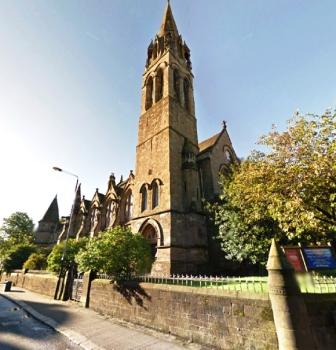
St Jude’s Free Presbyterian Church, Glasgow

As the constitutional heir of the historic Church of Scotland, the Free Presbyterian Church traces its Scriptural roots through the Scottish Reformation to the New Testament itself. It seeks to uphold a full testimony to Reformed doctrine, worship and government:

  • In doctrine, the Church’s only supreme standard is Scripture, with the entire Westminster Confession of Faith as its unqualified subordinate standard.
  • In worship, the Regulative Principle is applied consistently, so that nothing is brought into worship except what Scripture requires.
  • In government, Scriptural principles are applied to the life of the Church and to the lives of the people.

With written and audio content, the website seeks to defend, explain and commend the Christian faith in the distinctively Reformed context which Scripture requires for all Churches everywhere. A good place to begin finding out more is at About Us.
 

Defender of the Faith or Protector of All? Has the King broken his coronation oath?

Introduction

This article argues that recent changes in the official description of King Charles III’s religious role – styling him as one who “protects the space for Faith within the multi-faith nation” – are incompatible with the Coronation Oath and related statutory declarations that bind the monarch “to the utmost” of his power to maintain “the true profession of the gospel” and “the Protestant Reformed Religion established by law”. It contends that these oaths, including the separate Scottish accession oath to preserve the “true Protestant Religion” and Presbyterian church government, define the office’s constitutional and confessional character, and that a sustained pattern of pluralist public rhetoric constructively repudiates the intended meaning of these oaths, without formal statutory repeal. Writing from a Christian perspective, the article maintains that believers may continue to honour and pray for the King while also acknowledging that an oath publicly broken remains broken before God, and affirming that Christ alone remains “King of kings and Lord of lords” over all earthly rulers.

The King’s written role has been conspicuously recast since last year, when the Sovereign Grant report described him as “Head of the Church of England and Defender of the Faith”, employing the historic title first granted to Henry VIII by Pope Leo X for his Defence of the Seven Sacraments against Martin Luther. This year’s formulation is deliberately different. Page 2 of the document1 printed on 25 June 2026, states, “His Majesty is Supreme Governor of the Church of England and protects the space for Faith within the multi-faith nation”. The designation, “Supreme Governor of the Church of England”, is (whatever it means) far preferable to the theologically mistaken and blasphemous style employed in 2024, “Head of the Church of England”, for the Church of God in England, as in every land, must acknowledge only one Head: the Lord Jesus Christ. Yet the latter clause, “and protects the space for Faith within the multi faith nation”, is the principal concern of this article. The Holy Scriptures command us to “be subject unto higher powers (Rom 13:1-10; 1 Pet 2:13-17) and urge us to pray “for kings and all who are in authority” (1 Tim 2:2). Yet we (and our King) are to recognise a far higher sovereign – Almighty God, Creator of heaven and earth. We owe Him our utmost reverence and obedience.

King Charles has violated the Coronation Oath and Protestant Settlement.

A coronation in Britain is not a religious performance but a constitutional act in which solemn vows are sworn before Almighty God on the Holy Scriptures. Thus the 2023 coronation of King Charles was not merely ceremonial: before the crown was placed on his head, he must publicly swear, on oath, to govern according to law and uphold an established religious settlement. These promises are not pious sentiments but binding obligations, made “in the presence of God” and expressly tied to a specific confession: “the true profession of the gospel” and “the Protestant Reformed Religion established by law”. This article argues that the King has breached those obligations – not by enacting new laws, but by publicly defining his religious role in ways that contradict the oath’s explicit confessional commitments, styling himself “protector of the space for Faith within the multi-faith nation”, which conflicts with his vow to maintain “the true profession of the gospel” and “the Protestant Reformed Religion established by law”.

The constitutional and confessional character of the Coronation Oath.

This oath contains two kinds of promise. First, the constitutional pledge to govern according to law: to rule the peoples of the United Kingdom “according to their respective laws and customs”, and to cause “law and justice, in mercy, to be executed” in all judgements. This binds the monarch not to reinvent the office but to exercise it within the settled constitutional order, fulfilling the role as defined by law.

Second, there is a distinctly confessional pledge. The monarch swears “to the utmost of [his] power” to maintain “the laws of God and the true profession of the gospel”, and “to the utmost of [his] power, maintain in the United Kingdom the Protestant Reformed Religion established by law,” and to preserve “inviolably” the settlement of the Church of England, with its “doctrine, worship, discipline, and government . . . as established by law.” That settlement, as the historic expression of an established Protestant national Church, defines the framework within which the Crown must exercise its spiritual responsibilities to the realm.

Additionally, at the Accession Council on 10 September 2022, the King signed and subscribed a separate oath2 binding him to “inviolably maintain and preserve the Settlement of the true Protestant Religion” and “Presbyterian Church Government” in Scotland, together with the “Government, Worship, Discipline, Rights and Privileges of the Church of Scotland” – a settlement explicitly Presbyterian and distinct from Anglicanism. Together, the Coronation Oath and the Scottish accession oath are specifically tied to the legal settlements of the national Churches in England and Scotland, placing the Crown under both religious and constitutional obligations: the point is not that the monarch must be a private theologian (although he ought to be a diligent and prayerful reader of the Holy Scriptures), but that the monarchy is legally shaped by a Protestant Episcopal settlement in England and a Protestant Presbyterian settlement in Scotland, both publicly embraced by the sovereign.

The statutory Protestant declaration and the identity of the office.

Alongside the coronation promises stands an additional statutory declaration:

“I . . . do solemnly and sincerely in the presence of God profess, testify, and declare that I am a faithful Protestant,” and undertake to “uphold and maintain” the enactments that secure the Protestant succession “to the best of [my] powers according to law”.

Whatever the King may privately think of this settlement, the legal position is clear: the monarchy is not described as religiously neutral. The settlement explicitly defines the monarch’s religious identity as Protestant, and the sovereign publicly swears to maintain it. The office, in law, is that of a Protestant confessor bound to uphold a particular succession, not a generic spiritual patron presiding impartially over multiple religions.

The breach is: pluralist self-description versus sworn confession.

The basic allegation is clear: King Charles III has publicly re-described his religious office in terms that are incompatible with his sworn obligations. By presenting himself as a neutral guardian of “faith” in general, he replaces the legally binding Protestant confession with a principle of pluralist neutrality. That substitution is more than regrettable wording; it repudiates, in constitutional terms, the substance of the Coronation Oath and the statutory Protestant settlement it protects.

Describing the monarch as one who “protects the space for Faith . . . ” legally frames his role as safeguarding religious pluralism. It implies that he stands above particular confessions, offering civic shelter to diverse faiths treating each faith as equally legitimate and equally entitled to royal patronage.

Yet the Coronation Oath obliges the monarch to maintain a determinate settlement in which the Christian gospel is affirmed as true, and the Protestant religion is maintained by law. “The true profession of the gospel” is, in juridical terms, a confessional standard that distinguishes truth from error; a generic commitment to “faith” is, by contrast, a pluralist standard that treats disparate faith claims as standing on the same footing and equally entitled to royal protection. The pluralist framing functions as a competing constitutional principle rather than a mere supplement: once the monarch’s religious function is defined publicly in terms of protecting faiths in general, his sworn Protestant obligations are effectively recast as historic forms whose confessional substance is no longer operative. This is the core of the contradiction and the essence of the breach.

“In law” and “in public rhetoric”: how rhetoric acts as repudiation.

Some will seek to reduce this to mere opinion. Yet coronation oaths are legal constitutional instruments. The oath repeatedly anchors its religious content in legal language – “established by law” and “according to law”. The King does not merely admire a tradition, but must uphold a settlement defined by the constitution in religious terms. A key distinction, then, lies between legal form and public presentation. In strict law, the Crown may continue to bear formal responsibility toward the established Church of England and the Protestant settlement, and the monarch may participate in constitutional procedures that reflect the relationship. Nevertheless, the public meaning of the office is largely shaped by its official description and communication.

If official messaging consistently frames the monarch as a pluralist protector of faith, it gradually shifts public understanding away from the oath’s confessional content. When a monarch publicly presents his office as a pluralist facilitator rather than a Protestant guardian, he signals that the Crown’s religious duty differs from, and in practice displaces, the oath’s sworn terms. In effect, a legal settlement can be hollowed out without formal statutory change: the words remain on paper, yet a sustained pattern of contrary public rhetoric nullifies the oath’s confessional meaning.

“To the utmost of your power” and downplaying Protestant obligation.

The oath’s wording, “to the utmost of your power”, implies more than passive non-interference; it requires active upkeep. Treating Protestant obligation as merely an option, rather than the office’s sworn duty, falls short of that requirement. When a monarch’s public rhetoric repeatedly casts the Crown as protector of a “multi-faith” space, it downplays, relativises and trivialises the very confession he swore to uphold. A vow to preserve the Protestant religion “to the utmost” cannot co-exist with a public stance that treats Protestant confession as merely one strand among many, all equally under a state-sanctioned “faith” canopy. Thus rhetoric acts as repudiation: not by repealing the oath, but by stripping its confessional content from the practical understanding of the office.

The Scottish obligation and the settlement’s specificity.

The United Kingdom’s religious settlement is not purely English; the monarch also has a specific duty to the Protestant faith in Scotland. Under the Protestant Religion and Presbyterian Church Act 1707 and related Union legislation, the sovereign is bound to “inviolably maintain and preserve the settlement of the true Protestant Religion”, including Presbyterian church government, worship, discipline, rights and privileges in Scotland. The King is not a governor but an ordinary member of the Church of Scotland, yet he remains bound by oath to uphold its Protestant and Presbyterian settlement. This underscores the fact that the constitutional duties are specific, settlementbound, and Protestant by design, not generic commitments to protect “faith” in the abstract.

The United Kingdom’s constitutional religious framework therefore has a dual, legally defined character: an Anglican, Episcopal settlement in England and a Presbyterian, Reformed settlement in Scotland, both safeguarded by oath. This supports the claim that the coronation and accession is not a vague promise of religious respect, but a set of settlement-specific obligations. A general pluralist identity does not sit comfortably with, and cannot be squared with, the constitutional specificity of the monarch’s sworn Protestant duties in both realms.

Conclusion: a covenant publicly broken.

The argument therefore reaches a grave conclusion. King Charles III has, essentially, broken his coronation vows by presenting the Crown as a neutral protector of religious pluralism instead of a monarch bound by oath to uphold “the true profession of the gospel” and “the Protestant Reformed Religion established by law”. This claim does not require proof that the King altered legislation; it rests on the fact that these vows are not ornamental but define the sworn obligations of the office. When he adopts the phrase “protects the space for Faith within the multi-faith nation,” he contradicts the oath’s explicit confessional content, effectively exchanging the obligation to maintain the gospel and the Protestant settlement for a syncretist reimagining of the office.

On its own terms, that is a breach – not because Parliament repealed an Act, but because the monarch publicly set aside his oath and invited the nation to view the Crown as something other than a Protestant office under God. From a Christian perspective, this can be stated without fostering contempt for authority. Christians may still honour the King, pray for him, and obey lawful commands for conscience’ sake, since Scripture commands prayer for rulers and respect for lawful government; yet none of these duties require us to deny that breaking an oath is breaking an oath. A vow made “in the presence of God” is not nullified by the passage of time. If the monarch will not uphold his sworn confession, the Church must uphold hers, plainly declaring that Christ remains “King of kings and Lord of lords”, whatever earthly kings may say about their offices or however far they may stretch
their vows.

May it please the Lord to open the King’s eyes and enable him to flee to the Lord Jesus Christ that he might obtain mercy and become valiant for truth, and (by the grace of God) become a true nursing father to the church in our land (see Is 49:23).

  1. www.gov.uk/government/publications/the-sovereign-grant-and-sovereign-grant-reserve-annual-report-and-accounts-2025-to-2026. ↩︎
  2. www.royal.uk/his-majesty-kings-oath-relating-security-church-scotland. ↩︎

– By D P Rowland, Free Presbyterian Magazine, August 2026 issue

July 2026 Magazines online

The Church’s magazines for July 2026 are available at the following links:

Free Presbyterian Magazine

Young People’s Magazine

Bible Knowledge Online Course

BKonline is a Bible Knowledge course centred entirely on Biblical Christianity. It is designed for children between the ages of 4 and 12 and is suitable for delivery by teachers, by parents working with their children, or by children working independently.

The course is run by the Free Presbyterian Church of Scotland. We welcome everyone to the course and hope that it is a means of developing their understanding of the Bible. Therefore, it is provided free of charge to students across the world.

Purpose

The BKonline course is an online study environment that aims to enable children to learn the sound teaching of the Word of God in an engaging manner. It aims to encourage children to develop a moral and spiritual compass that will direct their lives as they grow to adulthood.

Above all, we desire that the course will be a means of bringing souls to a saving knowledge of Christ. The servants at the marriage in Cana filled the vessels with water but the Lord turned the water into the best wine. Similarly, we must fill young minds with Biblical knowledge, but look to the Lord alone to bless it to the saving of their souls.

Structure and Format

When it is finished, this free course will be layered in 9 levels (Preschool to 8), suitable for children from pre-school age to age 12. At the moment, we have Preschool to Level 4 complete and available to users.

The core material of the course explores the teaching of the Bible (Authorised Version), using audio-visual material and a variety of interactive activities, teaching aids and assessments. It illustrates to children, from an early age, the need to learn that the Bible principally teaches “What man is to believe concerning God and what duty God requires from us.”

You can sign up for the course here: https://fpcs-school.org.uk/

A free Bible

The Outreach Committee have a limited number of Bibles available for free distribution to people in the United Kingdom who do not have a Bible of their own. These English Bibles are in the Authorised (King James) Version.

To request a free Bible, please write to Rev J B Jardine by email (and include your postal address):

freebible.ws@btopenworld.com

A young man was once under great concern for the salvation of his soul. “What can I do?” was his earnest question. “Believe on the Lord Jesus Christ,” he was told. “Yes,” he replied, “but where can I find Him?” “Find Him in the Word of God,” he was told. He took his Bible, and began reading at the beginning of the New Testament. He had not reached the end of the first chapter, before He found the Saviour he so needed, in Matthew 1:21, “And she shall bring forth a son, and thou shalt call His name JESUS: for He shall save His people from their sins.” After that, the Bible became that man’s most precious and treasured possession.

“The entrance of Thy words giveth light” (Psalm 119:130).

Please note that these Bibles are for personal use only, and are not for resale.

Upcoming Events (DV)

Aug 27
27 Aug - 31 Aug

Communion: Stornoway, Zenka

Sep 3
3 Sep - 7 Sep

Communions: Sydney, Ullapool, Chesley

Sep 10
10 Sep - 14 Sep

Communions: Halkirk, Munaka, Portree

Sep 17
17 Sep - 21 Sep

Communions: Tarbert

Sep 24
24 Sep - 28 Sep

Communions: Aberdeen, Barnoldswick, Ingwenya

View Calendar

Latest Articles

  • Defender of the Faith or Protector of All? Has the King broken his coronation oath?
  • 2026 Theological Conference
  • July 2026 Magazines online
  • Youth Conference in Australia
  • Valuing the Gospel Ministry

Recently Added Audio

  • Eternal Life or Eternal Condemnation 2 Aug 2026
  • Fencing of Table and Table Address 2 Aug 2026
  • The Son of God coming forth to save 2 Aug 2026
  • The Church Reflects Christ’s Light 1 Aug 2026
  • Peter’s Denial 30 Jul 2026
  • The risen Christ going before 3 Aug 2026
  • How were thine eyes opened? 31 Jul 2026
  • The hope of pardon 30 Jul 2026
  • Responding to the coming Christ 31 May 2026
  • Revive Thy work 24 May 2026

View All Sermons

Download Latest Issues:
The Free Presbyterian Magazine
Young People’s Magazine

Free Presbyterian Places of Worship

Browse the Church Bookshop

Back to top

Website Contact

Rev Caleb J Hembd
caleb.hembd@gmail.com

Moderator of Synod

Rev K D Macleod BSc
11 Auldcastle Road
Inverness, IV2 3PZ
United Kingdom
E-mail: kdmacleod@gmail.com

Clerk of Synod

Rev Keith M Watkins
Free Presbyterian Manse, Ferry Road, Leverburgh, Isle of Harris, HS5 3UA, UK.
kmwatkins@fpchurch.org.uk

General Treasurer

Mr William Campbell
133 Woodlands Road, Glasgow,
G3 6LE, UK.
william.campbell@fpcoffice.org

Copyright © 2026 Free Presbyterian Church of Scotland · Log in · Subscribe via RSS · Privacy Notice